Building Healthcare AI on Sound
Epistemological
Foundations
Based on the work of
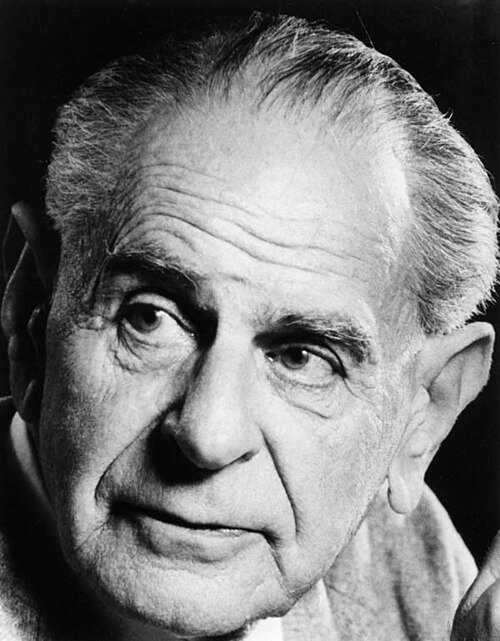
Karl Popper
1902 — 1994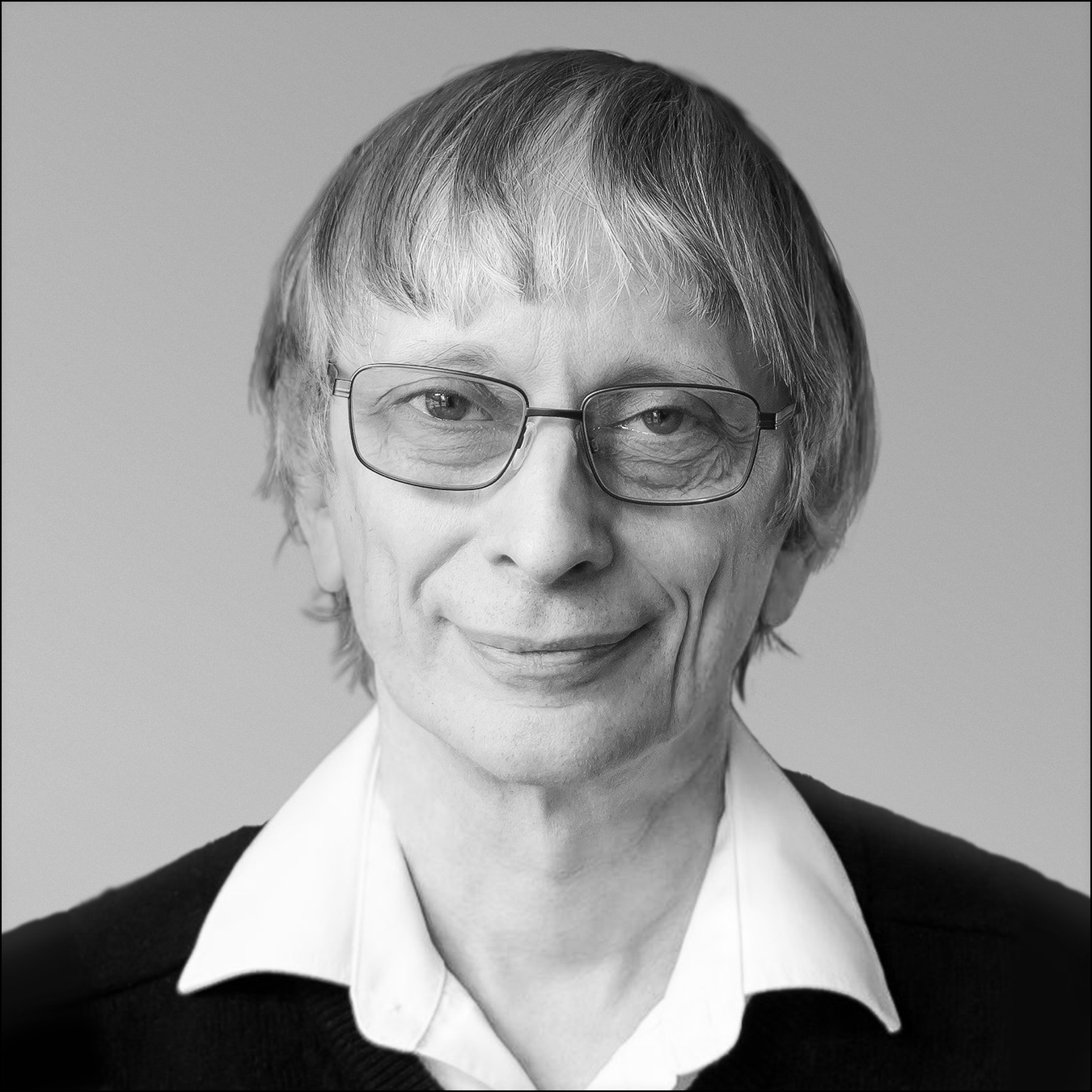
David Deutsch
1953 —Regain Health
Patient Health OS
AI-powered mobile app delivering personalized health protocols, daily coaching, and continuous optimization based on lab results and wearable data.
Regain Medical
Provider OS
AI-native Medical Information System reducing documentation time by 75%, automating clinical workflows, and enabling data-driven decision making.
Healthcare is an
Epistemology
Problem
A good explanation is hard to vary while still accounting for what it purports to explain.
David Deutsch, The Beginning of Infinity
The fundamental failure of current health AI is epistemological, not computational. We apply Popperian critical rationalism - conjecture and refutation - to build AI that creates genuine explanations, not probabilistic guesses.
The Inductive Fallacy in Healthcare AI
Most health AI makes predictions based on patterns. But pattern-matching is not understanding.
Correlation ≠ Causation
Most AI health tools confuse 'A usually follows B' with 'B causes A'
Pattern matching finds correlations, not causes.
The Black Swan Problem
Rare cases don't match common patterns. Medicine is full of rare cases.
Induction fails on edge cases that matter most.
Easy-to-Vary Explanations
Probabilistic outputs are 'mushy' - you can change details without breaking the theory
'You might have A, B, or C' explains nothing.
"We don't want an AI that hallucinates; we want an AI that arrives at hard-to-vary explanations.
Critical Rationalism in Medicine
We do not look for confirmation; we look for good explanations.
Conjecture
Generate bold explanations for the patient's health state
"What biological mechanisms could explain this?"
Refutation
Systematically attempt to destroy each explanation
"What evidence would kill this theory? Does the data already contain it?"
Survivor Selection
Only explanations that withstand rigorous criticism survive
"Theories survive by being hard-to-vary, not by being likely"
Conjecture
Generate bold explanations for the patient's health state
"What biological mechanisms could explain this?"
Refutation
Systematically attempt to destroy each explanation
"What evidence would kill this theory? Does the data already contain it?"
Survivor Selection
Only explanations that withstand rigorous criticism survive
"Theories survive by being hard-to-vary, not by being likely"
What Makes an Explanation 'Good'?
"A good explanation is one that is hard to vary while still accounting for the phenomenon it explains.
Interdependence
Change one part, the whole thing collapses
Components are logically connected
Test: Can you swap any detail without consequence?
Specificity
Makes precise, testable predictions
Not vague statements but concrete claims
Test: Does it predict something measurable?
Parsimony
Explains without arbitrary assumptions
No ad-hoc additions to save the theory
Test: Is every detail load-bearing?
Falsifiability
There exists a clear data point that would prove it wrong
The theory makes itself vulnerable
Test: What would disprove this?
See the Difference
Bad Explanation
You feel tired because of a virus.
Good Explanation
Your fatigue is caused by Epstein-Barr reactivation. The virus infects B cells, triggering a cytokine response. Your elevated liver enzymes (ALT 67) confirm hepatic involvement.
Every recommendation in Regain is scored on these criteria, not probability.
The Debate
Architecture
Simulating a World-Class Medical Team via Adversarial Debate
01 Intake
The Intake Agent
Maps the patient's Health State into a structured timeline of unexplained phenomena
02 Conjecturer
The Conjecturer
Bold hypothesis generation: What biological mechanisms could explain this?
03 Critic
The Critic
Systematic refutation: What evidence would kill each theory?
04 Synthesizer
The Synthesizer
Picks the theory with fewest contradictions
If refuted → new conjecture
01 Intake
The Intake Agent
Maps the patient's Health State into a structured timeline of unexplained phenomena
02 Conjecturer
The Conjecturer
Bold hypothesis generation: What biological mechanisms could explain this?
03 Critic
The Critic
Systematic refutation: What evidence would kill each theory?
04 Synthesizer
The Synthesizer
Picks the theory with fewest contradictions
Technical Implementation
Implementation: Generator-Verifier-Reasoner (ArgMed)
Runtime: LangGraph state machine
Verification: Formal medical consistency schemas
The IDK Protocol
When We Say 'I Don't Know'
01
All Theories Refuted
Every candidate explanation has been falsified by available evidence. No surviving hypothesis remains.
02
Equally Easy-to-Vary
Surviving theories score identically on hard-to-vary criteria. No explanation stands out as more robust.
03
Missing Critical Data
The discriminating data point that would decide between theories is not available in the current dataset.
What Happens Instead of Guessing
OUTPUT
"Current knowledge is insufficient to distinguish between [Theory A] and [Theory B]."
OUTPUT
"The primary bottleneck is the lack of [Specific Data Point]."
OUTPUT
"Action: Safest-case posture until [Metric] is updated."
The Role of Discriminators
When theories tie, we identify the discriminator - the single test that would kill one theory but not the other.
| Surviving Theories | Discriminator | Logic |
|---|---|---|
| Overtraining vs. Insulin Resistance | Morning Cortisol | Overtraining → elevated; IR → normal |
By identifying the discriminator, we guide the next data collection step rather than making unfounded claims.
We do not guess when we don't know.
Open Questions
Problems We're Still Working On
Knowledge Creation vs. Retrieval
Falsifiability with Delayed Ground Truth
Hard-to-Vary vs. Prior Probability
Scaling Refutation
Want to Go Deeper?
Explore our technical deep dive into Hard2Vary AI and the Popperian Assessment Engine architecture.
Deep Dive: Hard2Vary AI
Comprehensive technical documentation on our epistemological AI architecture, debate systems, and error-correction mechanisms.
Join Our Team
We're looking for AI researchers with a strong interest in epistemology to develop the Popper-Deutsch assessment agentic system and apply it to healthcare.
Built on the ideas of Karl Popper and David Deutsch